
The Play's The Thing
Why reading, and not only watching Shakespeare's plays, matters

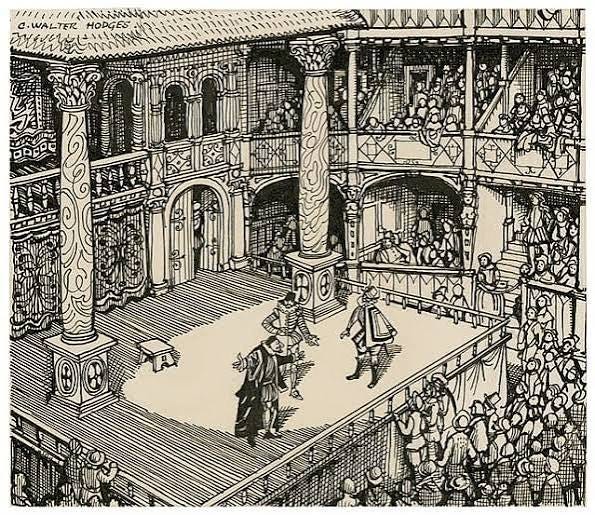
There is a large and continuous debate in the world of Shakespeare scholars and lovers as to whether Shakespeare’s plays should be primarily watched or read.
Shakespeare certainly intended his plays to be seen. While reading a play makes as much sense as only reading the script of a famous movie, watching it brings the plot and contents to life. The difficult Elizabethan language is also much easier to follow when one has a visual for what is taking place in the scene. Plus, why read a dry book if it is obviously not only easier, but also more interesting, to watch an adaptation of it?
Angelina Stanford, in “How to Read Shakespeare,” The Literary Life Podcast, counters, “Shakespeare intended to be watched with the particular acting troupe that he handpicked and he himself is directing. . . one of the things to understand about watching a performance of Shakespeare is that it is the director’s interpretation.”
No matter how true directors attempt to be to the play, their adaptations can only be a showing of their own experience of the script. Shakespeare hardly gives us any help for stage directions, so where actors stand, look, and their inflection, is left entirely up to them and the directors. A minor change to any of these, however, can drastically change the meaning of a line, even the stage setup itself can have an affect! Hamlet’s line “to be or not to be” has wildly different meanings when said from within the globe theater, standing between heaven and hell, and said in a nihilistic black box stage. Even more than this is the problematic “throwaway lines.” Part of the genius of Shakespeare is that he puts some of his most important thoughts and the keys that explain a play in the most unassuming lines or scenes. The ones that are often the first to be cut out in adaptations, whether due to time restraints or fear of boring the audience.
This is not to say that there is no place for still watching Shakespeare adaptations. After having read the play, it is always fun to see how it can be acted out, and seeing how different directors chose to interpret certain lines, but it still shouldn’t be someone’s introduction to the play. For the same reason, many people (myself included) enjoy watching book adaptations, but know that watching the movie first can ruin the joy of imagining and discovering things on your own. The moment Legolas from The Lord of the Rings becomes Orlando Bloom, it is nearly impossible to imagine him as anyone else, even though that obviously isn’t who Tolkien had in mind when he wrote the character. The moment Mr. Bingley is turned into an awkward, but kind, idiot, it is sadly difficult to keep him in mind as charming, amiable, and perfectly normal and dignified, as he is in Pride and Prejudice, unless one has already read the books and built a strong depiction of the characters already, unmarred by the director’s understanding of them.

Classic literature reminds us that beauty and judgment used to travel together.